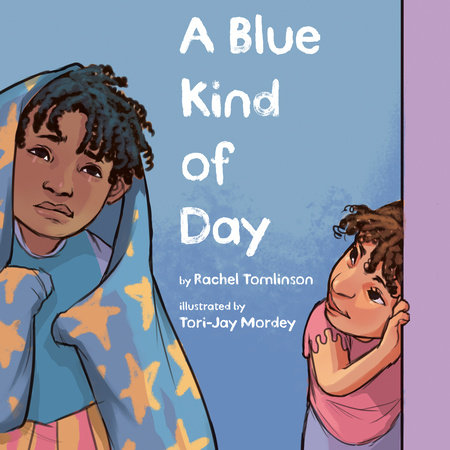
A Blue Kind of Day Tackles Big Feelings and Empathetic Support
by Jennifer Garry
One of the most challenging things to do as a parent is to watch your child struggle. Whether it’s relationship issues with friends, chronic illness, or all-encompassing feelings, my first instinct is to jump in and fix things.
“What if you try this?”
“It’s not that bad. I bet no one noticed.”
“Why don’t you tell her how you feel?”
But sometimes, things can’t be fixed. And other times, your kids don’t want you to fix things. In fact, jumping in and trying to resolve things can make the situation worse (almost sixteen years into this whole parenting thing, and I’m still trying to learn this). Sometimes, you just have to sit with them as they weather the storm.
A Blue Kind of Day by psychologist Rachel Tomlinson tackles this subject — as well as depression and sensory awareness — in a way that is helpful for readers of all ages.
Coen is having a really “blue” day. He feels “like a lost kite: loose in the breeze, with feelings that tangled like string.” His body feels tense and heavy and full of gloom. Unable to do anything but tuck himself under a blanket, his family becomes concerned. First, they try to make him feel better. Dad invites him outside to play catch, remarking that he feels better when he gets outdoors. Mom tells a funny joke. His little sister Junie shows him his favorite teddy bear. None of it helps. Coen just rolls over to face the wall.
His family doesn’t give up. Instead, they shift their perspective. Rather than trying to “fix” Coen’s mood, they snuggle in with him and wait it out. They know that “feelings cannot be rushed” and that his “blue feelings would not last forever.” So, they sit and wait.
Slowly but surely, Coen notices positive changes in his body as he moves from “prickly, tense, and wound up like a coil” to feeling warmth spread through him. As he emerges from his blue feelings, his family follows his cues and responds in the ways that he needs.
Coen’s family goes from trying to change his mood to accepting his emotions and supporting him. This shift allows him to get through it and brings them closer together.
Tori-Jay Mordey’s digital illustrations add another layer of emotion to the story, as each character (including Coen’s teddy bear!) wears their emotions on their faces. You can feel Coen’s despair through the pout of his lips and the heaviness of his eyes. His family’s concern is apparent as you look at their scrunched-up eyebrows. Even his little sister goes from jumping joyfully to hunched over with worry in a single spread.
The illustrations combine with the simple, relatable language to make this the perfect book to talk to kids about big feelings (both what they look like and what they feel like) and model ways to support loved ones when they feel sad. It pairs well with Cori Doerrfeld’s The Rabbit Listened, which shares similar themes.