Nosotros: On the Bond Between Mother and Child
by Paloma Valdivia
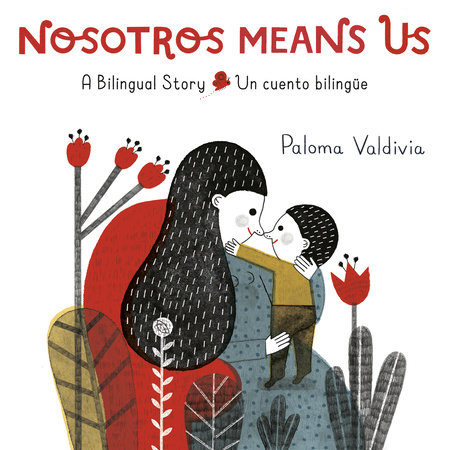
Paloma Valdivia is the author and illustrator of Nosotros Means Us, a moving bilingual ode to the unshakable bond between a parent and child. Read her essay in her native Spanish tongue here.
Within the faces of my newborn children, I have seen faces of the babies of the world, faces of the elderly, faces of suffering people, faces of every young animal that has crossed my gaze. It seems that motherhood connects us with the whole of nature, with humans we have not met, touched so deeply that we even feel connected with beings of other species. Trees in a forest connect through their roots and fungi, creating a network of silent conversations that transfer information and history and help each other.
We women also connect when raising children. My book, Nosotros Means Us, was born during my first motherhood experience, when even the sense of light changed for me, the days had other hours and those hours other extensions. Back then, there was a time of day that seemed particularly long. It was putting my baby to sleep — the meal, the bath, the pajamas, the milk, the bed, the story. My son was growing up in that routine, and I was growing with him.
For three years, I lay beside him to help him fall asleep. I sang to him and read many books. I made up stories and games. Among them, one was our favorite — playing at being others. We imagined ourselves being animals in different landscapes, where I was always the mother, and he was always my little puppy.
We stood in a field;
“If I were a sheep,” I began,
“I would be a lamb,” he answered.
Then we appeared in the sea;
“If I were a big fish,” I said,
“I would be a little fish,” he replied.
This game could be as short or as long as the tiredness with which he came to bed. As expected, there was always a moment when I was left talking to myself, and he had fallen asleep. At that moment, I could not stand up and run away as I would have liked. I had to stay still as if I were a pillow because everything would start all over again if I moved too abruptly.
During that time, I would observe every detail on his face, his tiny teeth, his freckles, and the thin hair that covered his cheeks. In that state of contemplation, I imagined that someday he would grow up and move on with his own life. I came to feel the nostalgia of not having him around, I glimpsed the feelings of a future empty nest.
Today, that boy is 12 years old. From time to time, I still lie down next to him and read with him. Although we no longer play that game, we have other complicities. Soon he will be like the bunny in my book that hops away into the woods.
Despite the time that has gone by, all those games and animals that we once were live inside us. We laid part of the roots and underground networks that link us today during those long nights. That game created part of the forest where we live today, and although we will no longer be the same, we will always be that mother and that son.
-
Léelo en Espanol
En la cara de mis hijos recién nacidos he visto la cara de los bebés del mundo, la de los ancianos, la de gente que sufre, la de cada pequeño cachorro de animal que se ha cruzado por mi mirada. Pareciera que la maternidad nos conecta con la naturaleza completa, con humanos que no conocemos, conmovidos a tal punto que hasta nos sentimos conectados con seres de otras especies. Los árboles de un bosque, se conectan entre ellos a través de sus raíces y hongos creando una red de conversaciones silenciosas que traspasan información, historia y se otorgan ayuda. Así también lo hacemos las mujeres cuando criamos. Nosotros, nace de esa primera maternidad, cuando hasta la luz cambió para mí, los días tuvieron otras horas y esas horas otras extensiones. Para ese entonces, había un momento del día que parecía particularmente largo, el de ir a dormir al bebé. La comida, el baño, el pijama, la leche, la cama, el cuento. Mi hijo crecía en esa rutina y yo también junto a él. Durante tres años me tendí a su lado para ayudarlo a conciliar el sueño. Le canté y leí muchos libros, inventé historias, dentro de ellas, había una que era nuestra favorita, jugábamos a ser otros. Nos imaginabamos en distintos paisajes siendo animales, yo siempre era la madre y él siempre mi pequeño cachorro.
Nos situábamos en el campo;
-Si yo fuera una oveja,- comenzaba yo,
– yo sería un cordero – respondía él.
Luego aparecíamos en el mar;
– si yo fuera un gran pez, -decía yo
-yo sería un pecesito,-me contestaba él.
Este juego podía ser tan corto o tan largo como el cansancio con que el llegaba a la cama. Como era de esperar, siempre había un momento en el que me quedaba hablando sola, él se había dormido. En ese instante, no podía pararme y salir corriendo como hubisese deseado, tenía que quedarme quieta, como si fuera un cojín, puesto que si me movía brusco, todo comenzaría de nuevo. Durante ese tiempo, aprovechaba de observar cada detalle de su cara, sus pequeños dientes, su lunar, el vello que cubría sus mejillas. En ese estado de contemplación, pensaba en que que algún día crecería y se iría para crear su propia vida. Llegué a sentir la nostalgia de no tenerlo cerca, vislumbré la sensación de sentir el nido vacío. Hoy, ese niño tiene 12 años, de vez en cuando, sigo acostándome a su lado a leer junto él. Si bien, ya no jugamos ese juego, tenemos otras complicidades. Dentro de poco será ese conejo que se pierde en el bosque.
A pesar del tiempo y el espacio transcurrido, todos esos juegos y animales que fuimos estan dentro nuestro. Esas largas noches echamos parte de las raíces y redes subterráneas que hoy nos vinculan. Esas noches creamos parte del bosque en donde hoy habitamos y aunque ya no seremos los mismos, siempre seremos esa mamá y ese hijo.
-
Buy the Book: